The Mortuary Assistant: A Clinical Nightmare Where the Dead Don’t Stay Still
- Category: Horror, Supernatural, Video Game Adaptation
- Release Date: February 13, 2026 (Limited Theatrical) / March 27, 2026 (Shudder)
- Cast: Willa Holland, Paul Sparks
- Language: English
- Duration: Feature Length (Approx. 95 mins)
- Director: Jeremiah Kip
- Screenwriter: Brian Clarke
- Producer: Dread / Epic Pictures
- Based on: The video game by DarkStone Digital (Brian Clarke)
Video game adaptations have historically struggled to capture the interactive terror of their source material. However, on Friday, February 13, 2026—a date perfectly chosen for its ominous connotations—The Mortuary Assistant arrived in limited theaters to prove that the gap between controller and cinema screen can be bridged with blood, formaldehyde, and dread.
Based on the 2022 viral sensation by Brian Clarke (DarkStone Digital), this film adaptation expands the claustrophobic nightmare of River Fields Mortuary into a full-blown cinematic experience. Directed by Jeremiah Kip and penned by the game’s original creator, the movie retains the unique “job simulator gone wrong” mechanic that made the game a cult classic. Starring Willa Holland (Arrow) and the intensely unnerving Paul Sparks (Boardwalk Empire), The Mortuary Assistant is a grueling, visceral descent into the occult. For the horror fans on fmovies.tr who enjoy the clinical body horror of The Autopsy of Jane Doe mixed with the puzzle-solving tension of an escape room, this is the most stressful shift you will ever work.
The Plot: One Night, Three Bodies, One Demon
The premise is deceptively simple, grounding the supernatural horror in a setting that is already naturally unsettling: a funeral home. We follow Rebecca Owens (Willa Holland), a young woman with a troubled past who has just completed her certification as a mortician. She is eager to start her career and perhaps bury her own demons by tending to the dead.
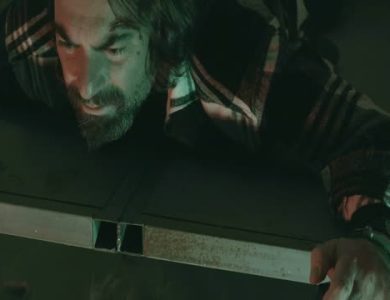
She accepts a night shift at River Fields Mortuary, a place run by her enigmatic and somewhat distant mentor, Mr. Raymond Delver (Paul Sparks). The job is supposed to be routine: process the bodies, perform the embalming, and file the paperwork. However, as soon as the doors lock and Rebecca is left alone with the corpses, the atmosphere shifts.
The Ritual of Preservation
What starts as flickering lights and strange noises quickly escalates into a fight for her soul. Rebecca discovers that River Fields is not just a place for the dead; it is a containment facility for demonic entities. One of the bodies on her slab is acting as a vessel for a demon, and that demon is looking for a new host: her.
Unlike a standard slasher, Rebecca cannot simply run away. To survive, she must perform the job she was hired to do. The film brilliantly translates the game’s mechanics into narrative beats. Rebecca must identify which body is possessed by observing subtle, terrifying clues (twitches, new markings, subtle movements) while simultaneously performing occult rituals to bind the entity. She is forced to race against time, balancing the clinical precision of embalming—draining blood, wiring jaws shut—with the frantic need to uncover the dark secrets of her mentor and her own suppressed trauma before the demon fully manifests.
Director’s Vision: Jeremiah Kip’s Cold-Blooded Atmosphere
Jeremiah Kip was an inspired choice for director. He understands that the horror of The Mortuary Assistant doesn’t come from monsters jumping out of closets; it comes from the vulnerability of the setting.
Clinical Horror: The film does not shy away from the realities of death. The sound design is particularly gruesome—the squelch of fluids, the cracking of rigor mortis, the hum of the pump machine. Kip uses these mundane sounds to build a rhythm that he then disrupts with supernatural terror. The mortuary itself feels sterile and cold, lit by harsh fluorescents that leave nowhere to hide, making the shadows that do appear even more terrifying.
Faithfulness to Lore: With game creator Brian Clarke writing the screenplay, the film is incredibly faithful to the lore. Fans of the game will recognize the specific sigils, the “letting strips,” and the names of the demons. However, the film expands on the mythology, delving deeper into the history of River Fields and giving more context to the haunting than the game’s narrative fragments allowed.
The Cast: Isolation and Intensity
For a film that is essentially a one-woman show for large portions of the runtime, the casting is critical.
- Willa Holland as Rebecca Owens: Holland carries the weight of the film on her shoulders. She brings a fragility to Rebecca that masks a core of steel. We learn early on that Rebecca is a survivor of past trauma (hinted to be addiction or family abuse, mirroring the game’s backstory), and Holland portrays her not as a screaming victim, but as a determined professional. Her terror is palpable, but so is her resolve. Watching her hands tremble as she tries to insert a trocar into a body while a demon whispers in her ear is a masterclass in physical acting.
- Paul Sparks as The Mentor: Paul Sparks is perfectly cast as the creepy, ambiguous boss. He has a naturally intense screen presence. Is he trying to help Rebecca, or is he feeding her to the wolves to save himself? Sparks plays the role with a dry, detached demeanor that makes him unpredictable. He provides the exposition without it feeling like a lecture, grounding the occult elements in a weary, matter-of-fact reality.
Critical Review: A Masterful Translation of Mechanics to Movie
The Mortuary Assistant succeeds where films like Doom or Resident Evil often failed: it captures the anxiety of the gameplay loop.
The “Uncanny Valley” of the Dead
The scariest thing in the movie is the bodies themselves. The practical effects team has done an incredible job creating corpses that look dead… but not quite dead enough. The film plays with your peripheral vision. Did that hand move? Did that eye open? The camera lingers on the faces of the deceased just long enough to make the audience uncomfortable. It capitalizes on the primal human fear of the dead body, twisting it into a supernatural threat.
Pacing: The Slow Burn vs. The Panic
The pacing is deliberate. The first act focuses on the procedural aspect of the job, desensitizing the audience to the gore of embalming. This makes the supernatural intrusion in the second act feel like a violation of the “rules.” The tension ratchets up as Rebecca realizes she can’t trust her own senses. Is the demon real, or is she hallucinating due to the chemicals and her own past? The film walks this psychological tightrope effectively until the explosive, effects-heavy finale.
For Fans vs. Newcomers
If you have played the game, you will find immense satisfaction in seeing the Sigil mechanic brought to life. You know the danger Rebecca is in before she does. However, the film is accessible to newcomers. It explains the rules of the ritual clearly without bogging down the narrative. It stands on its own as a solid possession horror film, even if you’ve never touched a keyboard.
The Mortuary Assistant is a chilling, atmospheric, and deeply unsettling horror movie. It transforms the solitary, taboo profession of undertaking into a battleground for the soul.
Willa Holland delivers a gripping performance, and the direction by Jeremiah Kip respects the silence and the sterility of the setting, making the scares hit harder. It is a rare video game adaptation that understands the spirit of the source material. Whether you catch it during its limited theatrical run or wait for the Shudder release in March, keep the lights on. After watching this, you might look at an open door or a dark corner a little differently.